No plastic bags: Recycling campaign tells Hampton Roads what goes in the bin
Source: The Virginian Pilot
Hampton Roads residents aren’t against recycling — some just don’t know how to properly dispose of waste.
Inspectors rooted through about 32,000 homes’ recycling carts last spring across James City County, Newport News, Norfolk, Suffolk, Virginia Beach and York County as part of a federally funded recycling education campaign. The goal was to find any unapproved items and leave warning notices for residents to advise what can and cannot be recycled.
Inspectors issued about 3,700 warnings and 660 rejection tags over two months, identifying rejected material called contaminants. Plastic bags and film were the top contaminants observed in 42% of contaminated bins, and bagged recycling in 36%.
“They want to recycle, but sometimes things they put into the stream can have a negative effect on the process,” said Katie Cullipher, director of communications for environmental education at AskHRGreen.
There is overwhelming support for recycling based on a 2024 regional survey conducted by askHRgreen, an initiative administered by the Hampton Roads Planning District Commission that aims to provide environmental education and resources to the region. But not many participants felt confident that they understood the rules, said Cullipher.
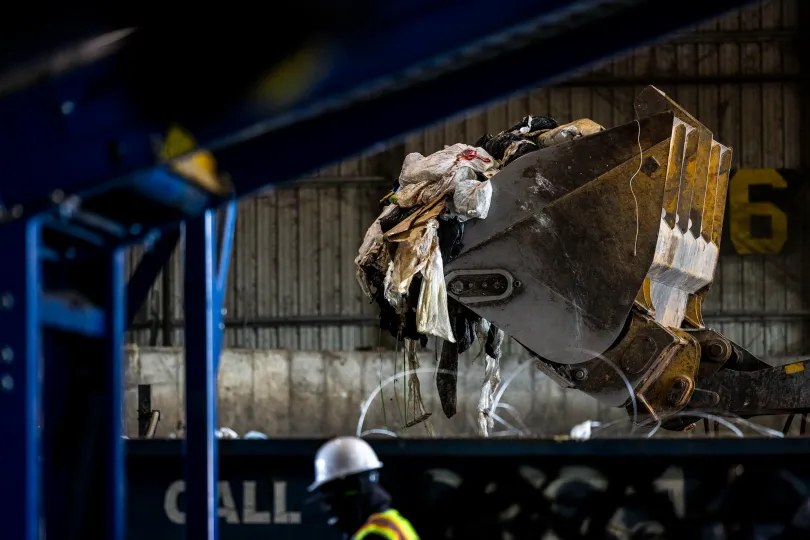
Processing facilities sort through an immense amount of waste, Cullipher said, and if recyclables arrive in bags, there isn’t time to stop the process and open each one. Plastic bags and film, such as plastic wrap, are recyclable, but aren’t accepted in traditional curbside recycling pickup programs.
Sarah Sterzing, programs manager for Keep Norfolk Beautiful, referred to the plastic items as “tanglers.” The material can destroy equipment in both trucks and processing facilities, she said, and should instead be brought to grocery stores with disposal options or to local collections.
At the end of the cart inspection program, Cullipher said, contamination decreased by over 36%, with the last run counting 94% clean carts.
“People were receptive to the information, we just needed to make sure we were getting it to them,” Cullipher said.
The information gathered from inspections was used to create a new education campaign, “What Do You Do With This?” which connects residents with disposal locations in their area.
“The goal is to acknowledge the confusion that’s out there and lead people to a credible resource,” Cullipher said.
South Hampton Roads localities had a 30.3% recycling rate in 2025, according to Eric Walberg, HRPDC’s principal for planning and economics. Peninsula localities saw a 32.8% recycling rate, said Tracy Hofmeyer, recycling coordinator and safety officer at Virginia Peninsulas Public Service Authority. The most recently available state average from 2024, according to the Virginia Department of Environmental Quality, was 39.5%.
The landfill used by South Hampton Roads localities was rapidly approaching capacity, but a new waste sorting facility came online this year that is expected to extend its lifespan. The Portsmouth facility more accurately sorts waste materials using artificial intelligence, diverting more waste from the landfill and increasing recycling rates.
To help redirect more items from the landfill, Norfolk’s public works division hosts two special waste collection events annually, with one at Southside STEM Academy on Saturday. From 9 a.m. to noon, residents can drop off plastic bags and film, electronics, car seats, and household hazardous waste such as paints, pesticides, and batteries — a fire-hazard if disposed of in the trash or recycled.
“When the doors close on a typical trash truck, those batteries can explode and ignite everything that’s in the hopper,” Sterzing said.
If residents want to dispose batteries and light bulbs when there aren’t any local collections, some hardware stores accept them for recycling, she said.
“We have about 17 years left in our local landfill,” Sterzing said. “Our hope is to decrease solid waste in general so we can increase the space we have for things that need to be in the waste bin.”
